Advanced Mitochondrial Formula combines eleven nutrients associated with mitochondrial function, cellular energy metabolism, and antioxidant activity. This guide explains what each ingredient is, its general role, and why it may be included. For pricing, see the homepage pricing section, and for the full product story, visit the official page.
Advanced BionutritionalsAdvanced Mitochondrial Formula is supplied as capsules in 90-count bottles. Always confirm exact per-serving amounts, other ingredients, and serving instructions on the current Supplement Facts panel on your bottle, since formulations can be updated by the manufacturer.
Advanced Bionutritionals| Ingredient | Amount | Details |
|---|---|---|
| Pyrroloquinoline Quinone (PQQ) | Included — see bottle label for exact amount | Jump to details |
| Acetyl-L-Carnitine | Included — see bottle label for exact amount | Jump to details |
| Coenzyme Q10 (CoQ10) | Included — see bottle label for exact amount | Jump to details |
| Quercetin | Included — see bottle label for exact amount | Jump to details |
| Alpha-Lipoic Acid | Included — see bottle label for exact amount | Jump to details |
| Curcumin | Included — see bottle label for exact amount | Jump to details |
| Bioperine® | Included — see bottle label for exact amount | Jump to details |
| Magnesium | Included — see bottle label for exact amount | Jump to details |
| Niacinamide | Included — see bottle label for exact amount | Jump to details |
| D-Ribose | Included — see bottle label for exact amount | Jump to details |
| Itadori Extract | Included — see bottle label for exact amount | Jump to details |
A compound studied for its antioxidant activity and possible involvement in mitochondrial biogenesis — the process by which cells produce new mitochondria.
Advanced BionutritionalsResearchers have investigated PQQ's relationship with pathways involved in mitochondrial biogenesis — the process through which cells produce new mitochondria — as well as its interactions with cellular oxidative processes. Its potential benefits in humans remain an active research area, and more clinical evidence is needed to establish specific health outcomes.
Advanced Bionutritionals Back to Supplement Facts summary ↑ · Read the full ingredient guide on the blog →A form of carnitine associated with transporting fatty acids into mitochondria for energy metabolism, and studied for its role in cellular and neurological processes.
Carnitine is naturally present in the body and also obtained through certain foods. Acetyl-L-Carnitine has been investigated for its involvement in cellular metabolism and neurological processes, and its role in this formula connects to the body's natural nutrient and energy pathways.
Back to Supplement Facts summary ↑ · Read the full ingredient guide on the blog →A naturally occurring compound involved in the mitochondrial electron transport chain, where it helps transfer electrons during ATP production, with recognized antioxidant properties.
CoQ10 is a naturally occurring compound found in nearly every cell, particularly important in the mitochondrial electron transport chain, where it helps transfer electrons during ATP production. The body produces CoQ10 naturally, while smaller amounts can be obtained through food.
Back to Supplement Facts summary ↑ · Read the full ingredient guide on the blog →A plant flavonoid found in apples, onions, and berries, widely studied for its antioxidant properties and interactions with cellular pathways.
Quercetin is a naturally occurring plant flavonoid found in foods such as apples, onions, berries, and other fruits and vegetables. It is widely studied for its antioxidant properties and interactions with various cellular pathways, including how it may interact with other plant compounds.
Back to Supplement Facts summary ↑ · Read the full ingredient guide on the blog →A naturally occurring compound involved in mitochondrial energy metabolism, acting as a cofactor for several enzymes that convert nutrients into energy.
Also known as ALA, Alpha-Lipoic Acid is a naturally occurring compound involved in mitochondrial energy metabolism. It acts as a cofactor for several enzymes involved in converting nutrients into energy and is also researched for its antioxidant properties.
Back to Supplement Facts summary ↑ · Read the full ingredient guide on the blog →The primary active compound in turmeric, researched for antioxidant properties and its interactions with inflammation-related biological pathways.
Curcumin has traditionally been included in many nutritional and herbal preparations. Its absorption can be limited when consumed alone, which is why researchers have investigated different approaches — including pairing with Bioperine® — to improve its bioavailability.
Back to Supplement Facts summary ↑ · Read the full ingredient guide on the blog →A branded black pepper extract associated with piperine, studied for its potential to support the absorption of nutrients and plant compounds such as curcumin.
Piperine, the compound associated with Bioperine®, has been studied for its potential to influence the absorption and metabolism of certain nutrients and plant compounds. It is often combined with ingredients such as curcumin in nutritional formulations, and its inclusion here is intended to complement the formula's other ingredients.
Back to Supplement Facts summary ↑ · Read the full ingredient guide on the blog →An essential mineral that contributes to normal muscle function, nervous system function, energy-yielding metabolism, and electrolyte balance.
Magnesium is an essential mineral required for hundreds of biochemical reactions in the human body, contributing to normal muscle function, normal nervous system function, energy-yielding metabolism, normal protein synthesis, electrolyte balance, and the maintenance of normal bones. It also participates in reactions involving ATP.
Back to Supplement Facts summary ↑ · Read the full ingredient guide on the blog →A form of vitamin B3 that contributes to the formation of NAD and NADP, coenzymes necessary for numerous cellular energy reactions.
Niacinamide is a form of vitamin B3 that helps the body maintain normal energy-yielding metabolism. It contributes to the formation of NAD and NADP, which are necessary for numerous cellular reactions, and is naturally available in various foods.
Back to Supplement Facts summary ↑ · Read the full ingredient guide on the blog →A naturally occurring sugar that forms part of the structure of ATP and other important biological molecules used in cellular energy metabolism.
D-Ribose is a naturally occurring sugar that forms part of ATP, RNA, and other biological molecules. It participates in the body's natural processes for producing and maintaining important cellular compounds and is frequently discussed in research related to cellular energy metabolism.
Back to Supplement Facts summary ↑ · Read the full ingredient guide on the blog →Derived from Polygonum cuspidatum (Japanese knotweed), a natural source of resveratrol and related polyphenols studied for antioxidant properties.
Itadori extract is derived from Polygonum cuspidatum, commonly known as Japanese knotweed, and is a natural source of resveratrol and related polyphenolic compounds. Resveratrol has been investigated for its antioxidant properties and possible interactions with cellular signaling pathways, including those involving sirtuins. The amount and composition of active compounds depend on the extract and its standardization.
Back to Supplement Facts summary ↑ · Read the full ingredient guide on the blog →Beyond the active nutrients above, capsule formulas typically include a small number of other ingredients such as the capsule shell and flow agents. These are listed on the Supplement Facts panel on the bottle, which should always be your primary reference.
Advanced Mitochondrial Formula is intended for adults and should be used as directed on the label. It is not intended to diagnose, treat, cure, or prevent any disease, and is not a substitute for a balanced diet or professional medical care. Read the full disclaimer for more.
Yes — the eleven ingredients above are listed based on the supplied product information. Always check the current bottle label for the authoritative list and amounts.
Several ingredients are individually researched in connection with cellular energy and antioxidant activity, but that research does not automatically establish the effectiveness of the complete Advanced Mitochondrial Formula product.
Capsule composition can vary by batch. Check the current Supplement Facts panel on your bottle for capsule material details.
Compare packages on the pricing section, read what users say on the reviews page, or head straight to checkout.
Order Now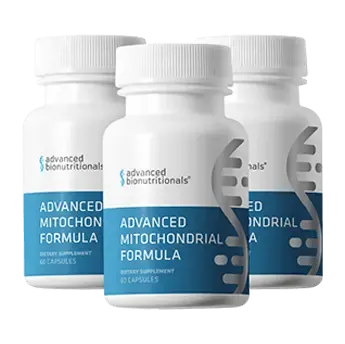 Advanced Mitochondrial Formula