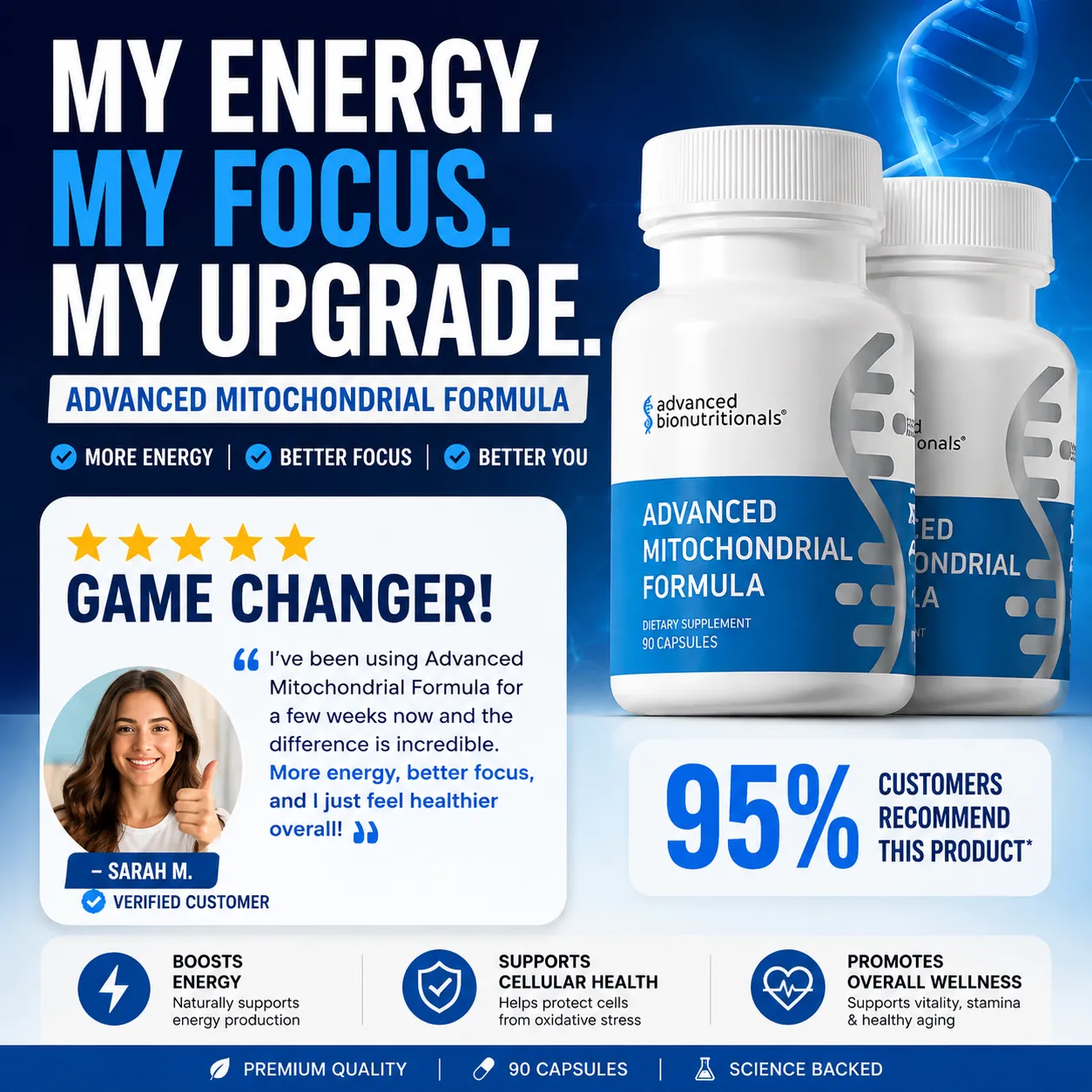
Advanced Mitochondrial Formula lists eleven active ingredients. Instead of a vague "proprietary blend," each one is named — which makes it easier to research before you buy. Here's a closer look at each, grouped by general role. For the complete breakdown with amounts, see the full ingredient guide.
PQQ (Pyrroloquinoline Quinone): studied for antioxidant activity and a possible role in mitochondrial biogenesis — how cells produce new mitochondria.
CoQ10 (Coenzyme Q10): involved in the mitochondrial electron transport chain, central to ATP production.
Acetyl-L-Carnitine: associated with transporting fatty acids into mitochondria for energy metabolism.
D-Ribose: a naturally occurring sugar that's part of the structure of ATP.
Niacinamide (Vitamin B3): contributes to NAD and NADP formation, both essential for cellular energy reactions.
Quercetin: a plant flavonoid from apples, onions, and berries, researched for antioxidant properties.
Alpha-Lipoic Acid (ALA): a cofactor for enzymes converting nutrients into energy, also studied as an antioxidant.
Curcumin: turmeric's primary active compound, researched for antioxidant and inflammation-pathway interactions.
Itadori Extract: a natural resveratrol source from Japanese knotweed, studied for antioxidant and cellular signaling properties.
Magnesium: an essential mineral for muscle function, nervous system function, and energy metabolism.
Bioperine®: a black pepper extract included to support the absorption of other nutrients, particularly curcumin.
None of these ingredients work in isolation inside the body, and the same is roughly true of the formula's design — energy-pathway nutrients are paired with antioxidant compounds and an absorption aid. See Advanced Mitochondrial Formula benefits for how this translates into the formula's overall focus, or how it works for the mechanism.
Individual ingredient research does not automatically prove the effectiveness of the finished product. Always check the current Supplement Facts panel on your bottle for exact amounts.
 Advanced Mitochondrial Formula